Reduce cat environmental stress: Best tips for spatial needs
"A cat's sense of smell is an incredibly powerful tool, with an olfactory mucosa area about twice that of humans."
To reduce cat environmental stress, owners must focus on territory management, sensory comfort, and respecting natural sleep cycles. Providing a stable environment involves managing scents, ensuring adequate rest, and respecting the spatial needs of the animal.
Key takeaways: * Respect the feline need for territory and vertical space. * Manage olfactory inputs to accommodate an acute sense of smell. * Allow for natural sleep durations of 12 to 16 hours.
How to reduce cat environmental stress through territory?
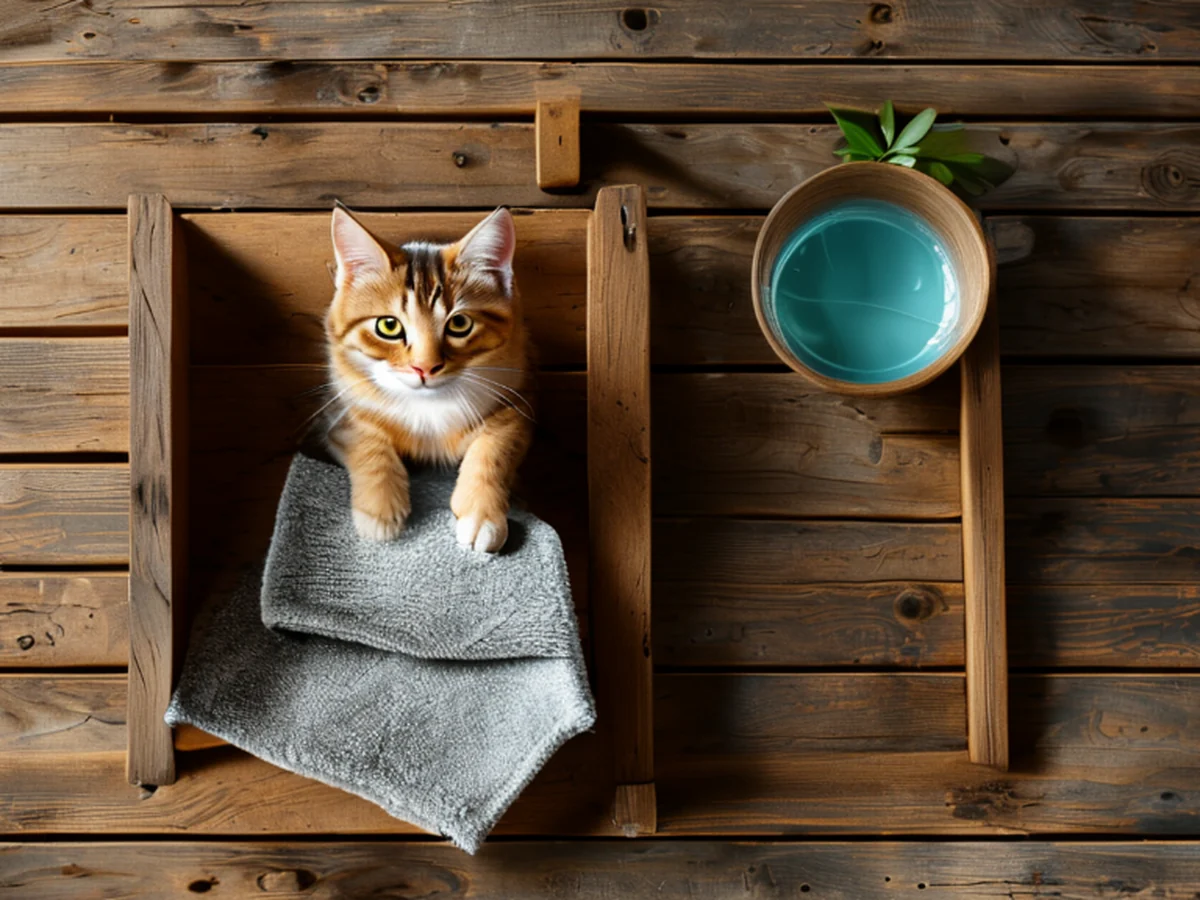
At dusk, I move the heavy wooden shelf to create a clear boundary to reduce tension in the living room.
A cat walks through a doorway, sniffing the air to map out the boundaries of its current space. Maintaining a predictable environment is essential because cats naturally hold distinct territories. In a colony, these areas serve as vital zones of security and control.
Managing the layout of a home helps in the effort to reduce cat environmental stress. Because cats rely on spatial boundaries, an overlapping or crowded environment can cause tension.
In natural settings, sexually active males hold territories that are about 10 times larger than those of female cats.
When living in a shared space, it is important to provide enough room to mimic these natural boundaries. If multiple cats live together, ensuring they have individual spaces helps prevent conflict.
A calm cat home setup requires enough distinct areas so that no animal feels their space is being invaded.
- Identify vertical spaces like cat trees or shelves.
- Establish distinct zones for feeding and elimination.
- Provide multiple hiding spots to allow for safe retreats.
How can we improve cat living space through sensory management?
In the quiet morning, I open the window to let in a cool breeze to reduce the heavy scent of perfume in the bedroom.
A person carefully cleans a room, ensuring no strong chemical scents linger in the air. Cats possess an acute sense of smell due to a well-developed olfactory bulb. Their olfactory mucosa covers an area of about 5.8 cm2 (0.90 in2), which is roughly twice the size of human olfactory tissue.
Because their noses are so sensitive, sudden or strong smells can disrupt their peace. Lower cat stress levels can be achieved by avoiding overwhelming fragrances in their primary living areas. A calm environment is easier to maintain when the air remains neutral to their sensitive noses.
Managing scents is a part of daily cat care routines that prevents sensory overload. Owners should be mindful of how much an animal perceives their environment through scent. Using subtle, natural scents rather than heavy perfumes helps keep the atmosphere stable.
In this sequence, the second step is the most extensive.
Why is sleep important for a calm cat home setup?
A cat curls up on a soft rug, settling in for a long period of rest. The daily duration of sleep for a cat varies, but it usually falls between 12 and 16 hours. The average duration typically sits between 13 and 14 hours of sleep per day.
Providing a quiet, undisturbed area for these long rest periods is necessary. A cat's well-being depends on being able to complete these natural sleep cycles without interruption. This is a vital part of making home cat friendly for an animal that spends much of its life sleeping.
If a cat is constantly interrupted, it may struggle to remain relaxed during active hours. Ensuring they have a safe place to hide or sleep helps stabilize their mood. Prioritizing these rest periods is a fundamental way to manage cat behavior well.
How to manage cat behavior well through routine?
An owner prepares a meal at the same time every day, watching the cat approach the bowl. Consistency in feeding and interaction helps establish a sense of security. Predictable schedules help the animal feel that their environment is stable and safe.
Routine helps prevent the anxiety that comes from sudden changes in the living environment. When an animal knows what to expect, they are less likely to experience sudden spikes in tension. This stability is a core component of cat hygiene and comfort.
| Feature | Measurement/Value |
|---|---|
| Average Sleep Duration | 13 to 14 hours |
| Olfactory Mucosa Area | 5.8 cm2 (0.90 in2) |
I find that maintaining these steady patterns helps the animal settle into their space more effectively.
What are the steps for a successful transition?
A cat cautiously explores a new room, sniffing the corners and testing the floor. Moving a cat to a new environment requires a gradual approach to prevent overwhelming their senses. Following a structured process can help mitigate the stress of change.
- Set up a small, quiet room with all necessary supplies before the cat arrives. 2. Introduce scents from the new environment gradually to avoid overwhelming their nose. 3. Provide ample hiding spots to allow the animal to retreat if they feel exposed.
After setting up the space, perform a final check to ensure there are no sudden noises or heavy fragrances. This gradual acclimation is essential for long-term stability.
What are the limitations of environmental management?
A cat jumps onto a high shelf, looking down at the room below. While much can be done to manage the indoor environment, certain biological factors remain constant. For instance, the natural instinct to territory and the physical needs of the animal cannot be entirely altered by decor.
The effectiveness of these methods depends on the specific temperament of the individual animal. It is not established that these environmental changes will resolve all behavioral issues, as some behaviors may be rooted in factors beyond simple space management.
Daily cat care routines
Related





Comments 0